Why OTT Platforms Dethroned Traditional TV Channels
The Great “Unplugging” of TV
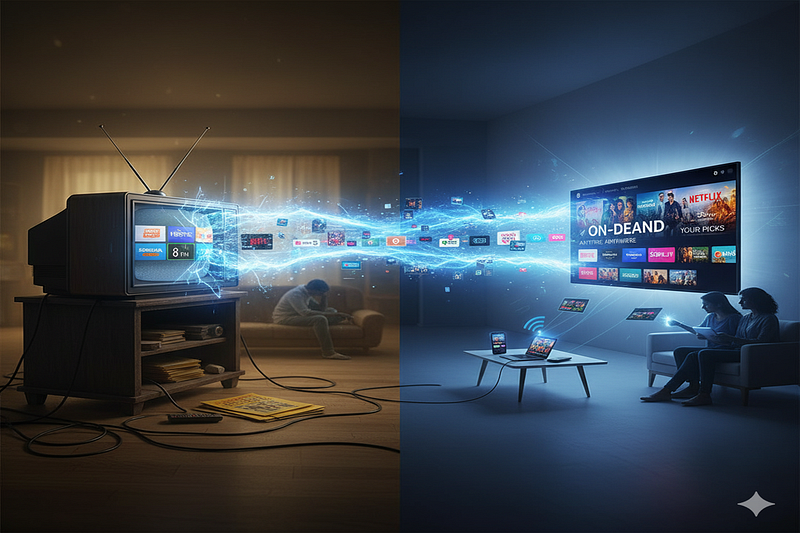
The shift from scheduled, broadcast television to on-demand streaming is the single biggest disruption the media industry has seen since the invention of the remote control. It’s not just a trend; it’s a fundamental change in how the world, particularly a mobile-first market like India, consumes entertainment.

Why did Over-The-Top (OTT) platforms bypass and eventually overpower the traditional cable and satellite model? The answer lies in the transfer of Control from the broadcaster to the Consumer.
Here is an analysis of the five key drivers that caused OTT platforms to dominate the traditional TV landscape:
1. The Death of the Schedule: On-Demand Power
Traditional TV operates on a rigid Linear Model. You must tune in at 8:00 PM on Tuesday to catch your favorite show, or you miss it.
- Traditional TV: Appointment viewing. The network controls the schedule.
- The OTT Revolution: “Anytime, Anywhere, Any Device.” The viewer is in control.
- Convenience: Watch an episode on your mobile during your commute, resume on your Smart TV at home, and watch a documentary on your laptop — all seamlessly.
- Binge-Watching: OTT popularized the model of dropping entire seasons at once, satisfying the modern viewer’s appetite for instant gratification.
This flexibility caters perfectly to busy, modern lifestyles, making the traditional fixed time slot feel archaic.
2. The Cost-Value Disparity: Paying for What You Want
The traditional cable model bundles hundreds of channels, forcing consumers to pay a high price for a vast amount of content they will never watch. This is known as the “Bundle Bloat” problem.
- Traditional TV (Cable/DTH): High, fixed monthly fee for a massive bouquet of channels, most of which go unwatched.
The OTT Solution:
- A la carte and Scalable Pricing: Viewers pay only for the platforms that provide the specific platforms. Low-cost and ad-supported plans, makes premium content accessible to a wider, more diverse audience.
3. Content Variety & Niche Domination
Traditional TV, particularly in its prime-time slots, must cater to the widest possible audience to justify ad rates. This leads to mass-appeal, generalist programming.
- Traditional TV: Broad, general content (Daily Soaps, Reality TV, Major News) designed to capture large, safe demographics.
The OTT Content Shift:
- Global Access: OTT platforms instantly gave local viewers access to international content (K-dramas, Spanish thrillers, global documentaries) that would never have been available on cable.
- Originals & Niche: Platforms invest heavily in Original Programming and niche genres (Sci-Fi, true-crime docs, regional web series) that cater to small, passionate audiences globally, leading to higher loyalty.
4. The Data and Personalization Engine
Traditional TV is a “lean-back” experience with limited audience data. OTT platforms are sophisticated technology companies that live and breathe data.
- Traditional TV: Mass advertising, broad targeting (e.g., “Mothers aged 25–45”). No idea if you liked the show.
The OTT Advantage (AI and Data):
- Hyper-Personalization: Advanced algorithms track your viewing habits, language preferences, and viewing times to create a customized recommendation feed. This solves the “What to Watch” problem and keeps users engaged.
- Better Monetization: This precise data allows advertisers to target specific users, leading to more relevant ads and higher revenue potential for the platforms.
5. Technological Freedom and Portability
The hardware limitations of cable TV restricted viewing to the home television set and required proprietary equipment (Set-Top Boxes).
- Traditional TV: Location-bound. Relies on physical infrastructure (cables, satellites, set-top boxes).
The OTT Technology:
- Over-The-Top bypasses the traditional distributor entirely, running only on a public internet connection.
- Multi-Screen Access: Seamless viewing on smartphones, tablets, laptops, and Smart TVs.
- Internet Penetration: Affordable smartphones and cheap, high-speed mobile data made high-quality streaming a reality for millions.
The Consumer is the New King
The shift to OTT represents a full-scale democratisation of content consumption. The old model was built on scarcity and control; the new one is built on abundance and consumer choice.
The fact that even legacy media giants — from Disney to Viacom — have launched their own OTT services (Disney+ Hotstar, Voot, etc.) is the clearest indicator: OTT isn’t replacing Traditional TV; it is the new way TV is delivered.
The “cable wall” has finally collapsed, and the consumer is celebrating with a binge session.
Disclaimer: This post may contain affiliate links. If you click and buy, we may receive a small commission at no extra cost to you. Read our full disclosure here.