

DeepSeek vs ChatGPT: TwoTitans of AI
Is DeepSeek actually a disruptor or just another Hype in the Artificial Intelligence World?
If there’s one thing I can’t resist, it’s diving into trending topics making waves in the world. Recently, my radar picked up on something intriguing: Deepseek, an AI tool many call the next big disruptor in the AI industry. Developed by a Chinese startup and founded by Liang Wenfeng in May 2023, DeepSeek has been hailed as a game-changer with its innovative large language models, DeepSeek-V3 and DeepSeek-R1.
Naturally, I had to do some digging. While ChatGPT has been my trusted assistant for writing, researching, and brainstorming, the buzz around Deepseek got me curious. Is it truly better? Can it replace ChatGPT? After exploring the two platforms and chatting with folks deep into AI tech, here’s what I found. And trust me, it’s worth the read if you’re into AI or if you’re someone like me who’s always eager to explore the latest trends.
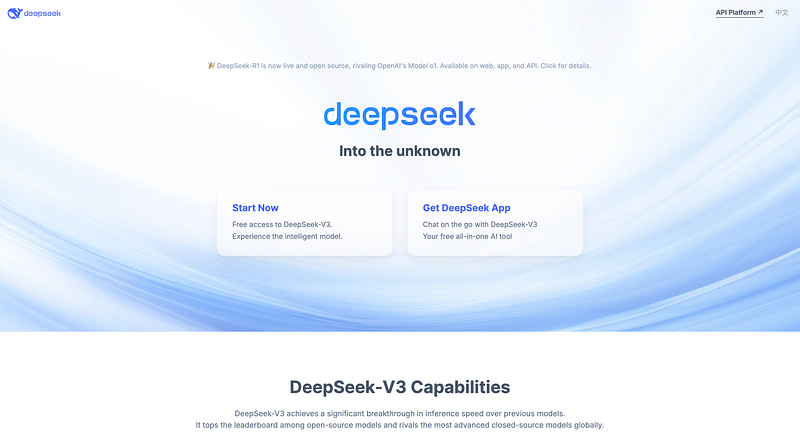
What Is DeepSeek, and What Makes It Different?
DeepSeek is a cutting-edge AI platform with a unique approach to AI model functions. Unlike traditional models, DeepSeek leverages a Mix-of-Experts (MoE) architecture. This design activates only a small portion of the model’s parameters for specific tasks, making it incredibly resource-efficient. This is a significant departure from the all-or-nothing model approach used by platforms like ChatGPT.
DeepSeek-V3 is a general-purpose model, while DeepSeek-R1 is tailored for tasks requiring advanced reasoning and deeper thinking. Together, these models cater to various industries, from education and healthcare to tech and marketing.
DeepSeek’s standout feature is its trial-and-error self-improvement capability, mimicking how humans learn and adapt. This sets it apart as a model that evolves over time without requiring constant human intervention.
DeepSeek vs ChatGPT?
1. Performance and Reasoning
Both DeepSeek and ChatGPT excel at generating human-like responses and solving complex problems. However, DeepSeek, especially its R1 model, has been recognized for its superior reasoning abilities. This benefits technical professionals like developers and engineers, who often need precise and context-aware responses.
ChatGPT, on the other hand, stands out with its multimodal capabilities, such as generating AI images, analyzing visual inputs, and supporting voice interaction. While DeepSeek focuses on specialized reasoning and efficiency, ChatGPT offers a more versatile experience, making it a jack-of-all-trades.
2. Cost-Effectiveness
DeepSeek’s MoE architecture allows it to use fewer computational resources, making it more cost-efficient than ChatGPT. This could be a game-changer for organizations or freelancers working on a budget, as AI capabilities come at a reduced cost without compromising quality.
3. Customizability
ChatGPT’s customized GPTs enable users to create tailored AI solutions for specific tasks, such as content creation or workflow automation. DeepSeek doesn’t yet offer personalized AI instances but compensates with its targeted performance optimization for complex reasoning.
4. Deployment Models
DeepSeek supports offline help and physical documentation, making it accessible in unreliable internet connectivity scenarios. This is a huge advantage for industries operating in remote or secure environments, such as defense or aerospace. ChatGPT primarily relies on an online infrastructure, limiting its utility in offline scenarios.

Is DeepSeek the Future of Artificial Intelligence
DeepSeek has sparked conversations about being the future of AI because of its emphasis on specialization and efficiency. By solving resource challenges and refining reasoning capabilities, DeepSeek positions itself as an ideal tool for professionals requiring precision, cost savings, and scalability.
Its self-learning ability also reflects a move toward adaptive AI, which could redefine how industries approach problem-solving and decision-making.
But to call it the future of AI, in my opinion, might be a bit premature. If there’s one thing we’ve learned from the ever-evolving AI landscape, it’s that change is constant. Every few years, a new breakthrough emerges, hailed as “the future” of technology, only to be followed by the next big thing. I remember the hype when ChatGPT was first introduced — similar articles, similar “MARKET DISRUPTOR ATTITUDE” from AI engineers, and concerns about data privacy dominating conversations.
DeepSeek certainly expands the horizon of what AI can do, but to say it defines the future of AI? I’m not so sure. The truth is that AI evolves at lightning speed, and while DeepSeek is an impressive milestone, it may just be another stepping stone on the path to what comes next.
AI’s adaptability and resilience ensure that it will continue to surprise and innovate, shaping the future of technology in ways we can’t yet imagine.
AI can undoubtedly has the potential to enhance the future, but labeling any single innovation as “the future” feels like an overstatement. We’ve been here before and will likely be here again when the next breakthrough arrives. DeepSeek might be the talk of the town now, but the AI world is known for surprises. Let’s watch and see how the story unfolds.
How DeepSeek Benefits Various Professions
1. Technical Writers
For technical writers, DeepSeek offers immense value. Its ability to process complex queries and deliver precise, context-specific information makes it a reliable tool for crafting accurate documentation. Moreover, its support for offline help systems ensures that technical writers can create content for products without internet connectivity.
For instance, imagine drafting user manuals for devices used in remote locations where online tools like ChatGPT might not be accessible. DeepSeek seamlessly fills this gap.
2. Developers and Engineers
DeepSeek’s advanced reasoning capabilities allow developers to debug code, optimize workflows, and gain insights into complex algorithms. Its efficiency also makes it easier for engineers to work on resource-constrained systems.
3. Content Creators and Marketers
Although DeepSeek primarily targets technical audiences, its cost-effectiveness and self-improvement abilities make it a valuable tool for content creators and marketers looking to produce accurate and engaging content without breaking the bank.
4. Healthcare and Education Professionals
DeepSeek’s focus on precision and reasoning makes it ideal for crafting educational resources or assisting in medical research. Its offline capabilities also ensure it remains helpful in regions with limited internet access.
The Limitations of DeepSeek
Despite its strengths, DeepSeek is still a newcomer compared to ChatGPT, which has established itself as a robust and versatile AI. DeepSeek lacks the user-friendly customizability that ChatGPT offers through customized GPTs, and its absence of multimodal functionalities (like voice and image interaction) may be a deal-breaker for some users.
Additionally, DeepSeek’s models are relatively untested in real-world scenarios compared to ChatGPT, which has undergone years of fine-tuning and user feedback.
Who’s the Winner?
So, is DeepSeek better than ChatGPT? The answer depends on your needs. If you prioritize cost-efficiency, advanced reasoning, and offline capabilities, DeepSeek might be the better choice. However, if you need a versatile, customizable, and multimodal AI, ChatGPT remains unmatched.
For technical writers like me, DeepSeek offers exciting possibilities, especially in crafting offline documentation and handling specialized queries. While ChatGPT continues to be my go-to AI, I’ll certainly keep an eye on DeepSeek as it evolves. There’s still a lot to come out, I guess.
PS: The information is based on my research and my conversations with a lot of people interested in and working on AI models. Any feedbacks, corrections or enhancements are whole-heartedly welcome.
Resources:
Disclaimer: This post may contain affiliate links. If you click and buy, we may receive a small commission at no extra cost to you. Read our full disclosure here.
