
How a K-Drama Changed My Life and Perspective
The story of a story that tells my story — K-dramas🤌
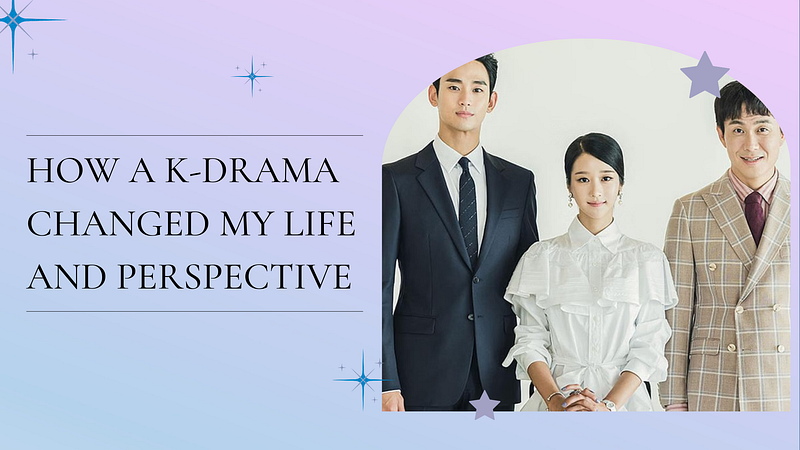
Korean dramas, or K-dramas, have a magical way of pulling you into their world. Be it their fascinating cinematography, the intricate plots, or the characters that seem almost like one us. Honestly, if I were a therapist, I might prescribe K-dramas to people struggling with their mental health because that’s what they’ve been for me — a balm for my soul.
I can binge-watch a K-drama for a whole day or weeks sometimes, and the satisfaction, the wholesome after-show feeling, is always the best. Of the numerous K-dramas I have seen, most of them have been unique in some way, but It’s Okay to Not Be Okay was different.
It found me at the right moment when I actually needed it the most. This was not just any ‘time pass’ wearisome show — it became a form of medicine, solace, and even a therapeutic during a tough time.
Finding Comfort in Characters Who Feel Real
When I first began watching It’s Okay to Not Be Okay, I was struggling, wrestling with the weight of anxiety, loneliness, and a sense of never quite measuring up. I’d spent so long pretending to be strong, putting on a brave face when I felt anything but brave. My mental health was in a rough place. Though I didn’t realize it at first, this K-drama eventually became more than a simple escape from my reality. It became a safe place to let my guard down.
The first character who resonated deeply with me was Moon Gang-tae, played by Kim Hyun. Gang-tae is a selfless person who always looks after others, especially his autistic brother, completely suppressing his own wants and needs. He endures a lot without asking for help, and I saw parts of myself in this regard.
There’s a powerful moment in the show where he admits, “Sometimes, I want to be taken care of too.”
It made me realize how deeply I buried my basic need for support beneath the face of a strong woman. Gang-tae’s innocence made me feel that it was okay to lower my defenses and allow people in.
It was better than I thought and I did not have to bear so much, if anything at all, on my own.
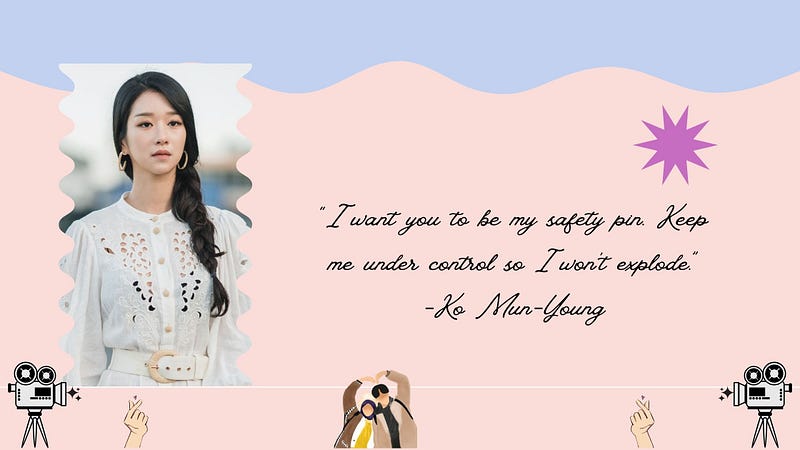
Learning Self-Acceptance from a “Weird” Character
Then, there’s Ko Moon-young, the strange children’s author played by Seo Yea-ji. Moon-young is fierce and bold and doesn’t blend into societal norms, which makes her seem a little “weird” at first. She says what’s on her mind and lives life her own way, no matter what others think. Her character is fascinating, sometimes disturbing, and yet inspiring. Underneath her confident, even aggressive exterior, she’s someone carrying deep pain from childhood traumas that she tries to cover up with her rebellious behavior.
Watching her character arc was one of the show’s most moving parts. Over time, you see how Moon-young slowly opens up about her past. She reveals how she’s always masked her own vulnerabilities, hiding them in her unique, often harsh way of dealing with the world. There’s one particular moment where she gently but powerfully reminds Gang-tae that “not everyone is strong.” That line made me realize that people who come off as “strong” or “weird” often hold onto their own traumas.
Moon-young’s story showed me that sometimes, the most “unusual” people struggle the hardest — and that being “different” makes them resilient.
Finding Hope and Healing Together
What made It’s Okay to Not Be Okay so special was that it wasn’t just about romance or dramatic turns. It is a narrative about healing and finding strength in accepting yourself. Thanks to Sang-tae, Gang-tae, and Moon-young’s bonding experience despite their individual journeys, I understood what this meant.
All this time, I understood pain as a very private experience that was not meant to be shared with anyone else. As I followed them, I realized that healing doesn’t always have to be an individual fight. Motivated by them, I started to engage with the people around me more meaningfully, sharing with them the nature of my problems and drivers of discontent, and, to my surprise, it made some of the weight I carried feel less heavy.
A good story can give you the little bit of hope and comfort you didn’t realize you needed.
The Comfort of a Good Story
Every episode of this series reminded me of the power of a good narrative. It reminded me to be kinder to myself, embrace patience, and not hold onto the idea that I needed to be “perfect” to deserve love and happiness. When the last episodes rolled in, I could internalize all the themes of the show—self-acceptance, self-care, and the importance of letting go.
Ko Moon-young taught me that it’s OK to accept the imperfect sides of myself and to even find beauty in them. Meanwhile, Moon Gang-tae reminded me that it’s OK to reach out for support and that life doesn’t have to be faced alone. This show was more than mere entertainment; it became a deeply therapeutic journey.
The themes of self-compassion, forgiveness, and acceptance kindled beacons on my journey within the world of mental health to live for today. With the great experiences and failures that happened to these characters, I found myself consumed by their own story and concluded that healing is a course that we need not pursue by ourselves.
A Personal Reminder for You, the Reader
You are not alone if you are reading this and feeling down, overwhelmed, or lost. The most unlikely pages of a book, the film frame, or, in my case, the K-drama scene work like a mirror for that piece of us, pushing gently on just what we need. Through such stories, I regained my faith in the magical power of storytelling: how a very well-told tale would emotionally nourish us, especially when we needed it most.
Maybe you find your own story through a K-drama, a conversation with a friend, a song, or quiet time. But wherever it may be, there’s going to be a comfortable place made just for you, the place where you will be seen and understood. As this show became my source of comfort, I hope you find stories that lift your spirits, remind you of your personal strength, and teach you the value of putting your arms around others as you walk your path.
Healing can be a journey, but it is so much easier with each other.

Disclaimer: This post may contain affiliate links. If you click and buy, we may receive a small commission at no extra cost to you. Read our full disclosure here.