
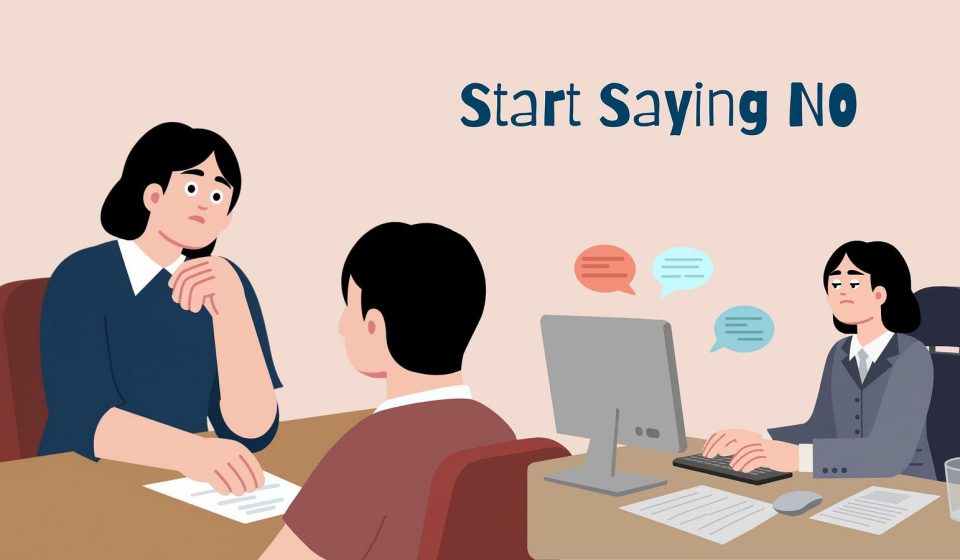
Your “Low-Maintenance” Personality is a Survival Strategy, Not a Strength
Stop confusing self-erasure with being easy-going. Here is why being “low-maintenance” could sabotage your career and relationships.
Being Low-Maintenance is a Survival Strategy, Not a Personality Strength
For years, I wore the “low-maintenance” badge like a medal.
I was the person who didn’t ask for much. I didn’t complain when the project scope crept into my Sunday afternoon. I adapted. I smoothed things over. I was the “chill” colleague, the “easy” friend, the partner who never made a scene.
People loved that about me. And if I’m being brutally honest, I loved that they loved it. There is a specific, addictive high that comes from being the person who is “zero trouble.”
But I have realized something that made my stomach drop: Being low-maintenance isn’t a strength. It’s a quiet way of deleting yourself.
The Praise Is a Warning Sign
- “You’re so easy to work with.”
- “I love how you just go with the flow.”
- “You’re so low-maintenance.”
We take these as compliments. We think they mean we’re winning at being a human. But look closer at what’s actually being praised. No one is admiring your vision, your boundaries, or your leadership. They’re admiring your convenience.
They are congratulating you for having no footprint. You are being thanked for being a ghost.
The Dishonesty of the “Cool” Person
We like to think of our “chill” nature as a gift to others, but it’s often a form of unintentional dishonesty. When you sit in a meeting, watch a deadline slide into Friday night, and nod “yes” while your stomach tightens into a quiet protest, you are misrepresenting reality.
You’re saying you have the capacity when you don’t. You’re signaling comfort when there is none. You’re masking a limit that absolutely exists.
Then comes the poison, i.e, resentment. You start to blame the people around you for “taking advantage,” but they aren’t mind readers. They’re responding to the version of you that you keep presenting. You’re training them to believe you’re a machine and then feeling betrayed when they treat you like one.

The danger of training people to see you as a machine is that they eventually forget you have a heart.
For years, I was the one who celebrated everyone else. I remembered the birthdays, I picked the perfect gifts, and I made sure others felt seen. But when my own birthday came around, it was met with a shrug and a silence that felt like a physical weight. When I finally expressed that it hurt, I wasn’t met with an apology. I was met with, “Oh, you just never seemed like someone who would be interested in that stuff.”
Because I didn’t demand the spotlight, they assumed I didn’t need the light at all.
This doesn’t just damage friendships; it quietly sabotages your professional growth. There’s a psychological quirk in how we value work. People value what they have to pay for, whether that payment is money, time, or emotional energy.
If you make everything look effortless, never ask for resources, and never push back, people start to believe your work is effortless. You aren’t seen as a hero; you’re seen as a commodity.
You can’t advocate for work you never acknowledged was hard.
When the Silence Breaks You
The most isolating part of being “low-maintenance” is when you finally try to break character.
I have always been outspoken about the importance of mental health, but I am also someone who hates seeking sympathy. I don’t sit quietly in corners; I laugh, I engage, I perform. But one day, when the weight of my mind became too much to carry alone, I finally spoke up. I told someone that I was struggling.
Their response broke me. “Are you sure? You don’t look like it. You keep laughing, and you seem fine. Is it really depression?”
That is the ultimate cost. When you finally find the courage to scream, people tell you they can’t hear anything because you’ve always spoken in a whisper. They mistake your survival mask for your actual face. They audit your pain because it’s inconvenient to their image of you as the “easy” one.

Most of us didn’t choose this. We were trained.
Maybe you grew up in a house where there wasn’t enough emotional oxygen for everyone, so you learned to hold your breath. You saw that the “squeaky wheel” got the resentment, not the grease. You realized that if you had no needs, you were no trouble, and in a chaotic or crowded environment, “no trouble” is the only way to be “good.”
You didn’t become low-maintenance because you were easy-going; you became low-maintenance because you were observant.
You learned to read the room before you checked in with yourself. You started a permanent internal negotiation where your discomfort felt like a small price to pay for a conflict-free evening. You traded your authenticity for an imitation of peace.
But peace at the expense of your own presence isn’t harmony. It’s a slow-motion disappearance. We think we are being selfless, but we are actually just making ourselves invisible so that no one can accidentally hurt us — or so we don’t accidentally “burden” them.
So how do you break the pattern?
Stop Being Easy. Start Being Clear.
Moving away from being low-maintenance doesn’t mean becoming “high-maintenance.” It means becoming high-clarity.
It means noticing when something feels wrong and naming it early. It means trusting that having a need doesn’t make you a problem; it makes you a participant.
The most grounded people I know aren’t the easiest to be around. They’re the clearest. They take up space. They trust that they are allowed to exist as full people, not just convenient ones.
Stop being the person everyone can rely on to be quiet. Start being the person you can rely on to be real. Honestly, I am already on the path as 2026 resolution, and so should YOU!
Have you ever felt “invisible” because you were too good at being the easy-going one? Let’s talk about the cost of being the chill friend in the comments.
Disclaimer: This post may contain affiliate links. If you click and buy, we may receive a small commission at no extra cost to you. Read our full disclosure here.