
7 Inventions That Changed the World in Unexpected Ways
Not all inventions bring expected results.
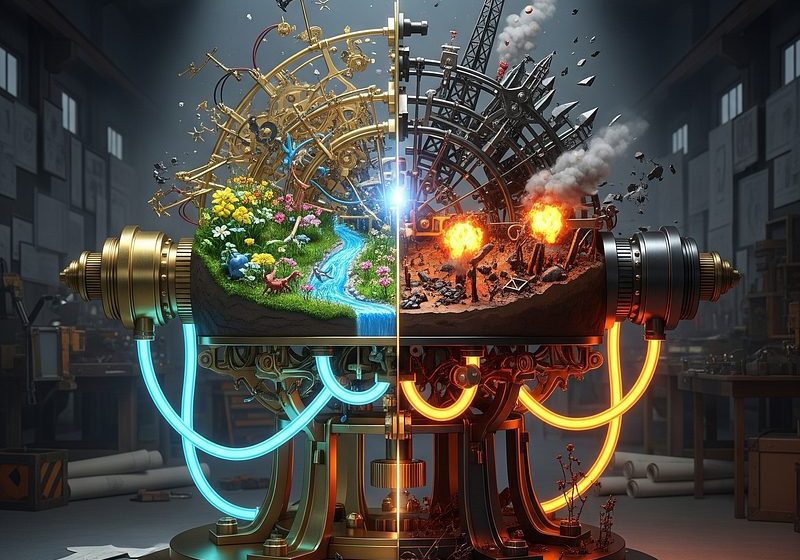
“Every invention has two faces — one that saves the world, and one that questions if we even deserve it.”
We live in a fast-paced world, and as we grow, countless inventions and discoveries have helped us advance in life, society, and the world. These inventions were nothing short of sparks in time; the salt in the dish, the essentials that helped humanity rise, evolve, and push boundaries. Some were created out of necessity, some for personal utility, and some purely for the sake of humankind.
But as time passed, and humans got smarter (or let’s say more clever than wise), we began reusing and repurposing these inventions in ways that even their creators didn’t see coming or, in some cases, deeply regretted.
It’s strange and even sad to see how inventions that were meant to protect, uplift, or heal ended up being twisted into tools of destruction, war, control, and suppression.
And while I love the modern world and all its brilliance, some of these stories caught me off guard, and I knew I had to share.
Here are 7 inventions that started with the best of intentions… and then flipped the script entirely.
1. Dynamite — Meant to Build, Used to Destroy
Inventor: Alfred Nobel
Originally for: Construction, mining, infrastructure development
What happened: Became a symbol of violence and warfare
Alfred Nobel wanted to make blasting rocks safer for workers. Dynamite was supposed to be a powerful tool, not a weapon. But soon enough, armies found a new way to kill more efficiently. Nobel was so horrified by the misuse of his invention that he left behind a legacy in the form of the Nobel Peace Prize — an attempt to reward peace with the wealth he earned from something that brought destruction.
2. Artificial Intelligence — Created to Help, Now Making Us Question Everything
Inventor: Multiple minds (Turing, McCarthy, etc.)
Originally for: Solving problems, mimicking human intelligence
What happened: Became a source of fear, misinformation, and control
AI, or Artificial Intelligence, was created to solve problems faster, think smarter, and help us live better. And while it still does that, it’s also opened a dark doorway — job losses, deepfakes, AI-generated war drones, and global surveillance. AI can now write, paint, speak, mimic, and manipulate. And the scary part is, we don’t know where the line ends.
What started as a miracle of logic may soon become our biggest existential question.
3. The Office Cubicle — A Space to Breathe, Turned Into a Box of Burnout
Inventor: Robert Propst
Originally for: Privacy, productivity, creative independence
What happened: Mass-produced soul traps in grey
Propst wanted to free employees and give them space to focus and feel empowered. But instead of freedom, companies turned his idea into a cost-saving hack. What we got were rows and rows of lifeless cubicles, draining creativity, energy, and will. From “Action Office” to “Dead Space,” the cubicle became the face of corporate numbness.
4. Chemical Weapons — Born in Science, Unleashed in Hell
Inventor: Fritz Haber
Originally for: Agricultural development (fertilizer)
What happened: Used to create deadly gases in World Wars
Haber’s work in nitrogen fixation fed millions, and it was saving lives. But he also helped develop chlorine gas for warfare. The same lab that gave life also gave death. His own wife, a fellow scientist and pacifist, ended her life after seeing what he’d become part of. Science gave humanity a miracle. We returned the favor with destruction.
5. Gunpowder — From Immortality to Mortality
Inventor: Chinese alchemists
Originally for: An elixir of life
What happened: Transformed into weapons that reshaped war
The irony of gunpowder is poetic. The alchemists in ancient China were trying to create a potion for eternal life. What did they end up making? A powder that would end lives for centuries to come. Gunpowder gave rise to guns, cannons, and warfare that changed how humans fought forever. Immortality was the dream. Death was the result.
6. Nuclear Energy — Powering Nations or Ending Them?
Inventor: Enrico Fermi and others
Originally for: Clean, efficient energy
What happened: Hiroshima, Nagasaki, Cold War arms race
The atom, when split, gave us immense power. Nuclear energy is still one of the most efficient and cleanest forms of energy we have. But before it lit up homes, it wiped out two cities. The bombings of Hiroshima and Nagasaki are burned into human memory. The Cold War pushed us into a constant threat of annihilation. And that fine line between innovation and extinction still exists today.
7. Eugenics — A Scientific Idea That Justified Inhumanity
Inventor/Proponent: Francis Galton
Originally for: Improving human genetics
What happened: Genocide, racism, forced sterilization
This is one of those inventions of thought — not tech. Eugenics began as a concept: let’s improve the human race by encouraging “better” genes. Sounds clinical, maybe even logical to some at first. But what did it become? Pure horror. Eugenics justified racial purity laws, forced sterilizations, and one of history’s darkest chapters — the Holocaust. A concept born in laboratories was weaponized by regimes. The idea of “better humans” created the worst in humanity.

Conclusion: Good Intentions Aren’t Enough
Not all of these inventions were entirely deadly. Some still hold relevance. Nuclear power still runs cities. AI still helps diagnose diseases. Honestly, the positives are now so buried under the consequences that we can barely focus on them. The very tools we created to uplift society are now used to control, destroy, manipulate, and suppress.
But not every good intention results in something good. Not everything you create will be used as you intended.
Sometimes, the why isn’t enough; you also need to consider the what-ifs.
Because the truth is, we are brilliant enough to invent anything… but not always wise enough to handle it.
Every invention has a shadow. And while we may build in light, it’s up to us to make sure we don’t lose ourselves in the darkness that follows.
Disclaimer: This post may contain affiliate links. If you click and buy, we may receive a small commission at no extra cost to you. Read our full disclosure here.