The “Unputdownable” Algorithm: 5 Psychological Secrets Authors Use to Keep You Hooked
The secrets behind narrative flow. A psychological take on how great authors use pacing, curiosity, and emotional design to keep you reading long past bedtime.
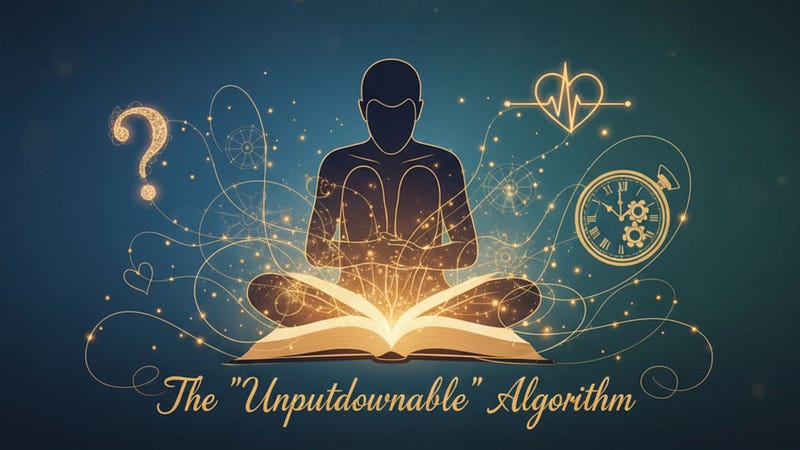
You know that moment when it’s 3:00 a.m., your coffee or tea is cold, and you whisper, “Just one more page?”
You are tired. Your eyes ache. But closing the book feels impossible.
I have been there too; most recently with Liu Cixin’s The Three-Body Problem.
As a writer, I thought I could spot every trick in the book. Yet one Tuesday night, I found myself wide awake, desperate to know if humanity could survive the Trisolarans. Sleep didn’t stand a chance.
That night taught me something. The most captivating novels aren’t just great stories — they’re finely tuned psychological machines. They don’t rely on your willpower to keep you reading. They bypass it.
Let’s pull back the curtain and see how authors quietly design the stories you can’t put down.
The Curiosity Gap
The Science of Needing to Know
Every story begins with a question. Not necessarily a literal one, but a gap between what the reader knows and what they must find out.
Psychologists call this the Zeigarnik Effect. It is a phenomenon where our minds fixate on unfinished tasks. Authors use it instinctively. They open a loop of uncertainty, and your brain refuses to let it close.
From the author’s side, this is careful engineering. The first chapter doesn’t just introduce characters; it sets up a puzzle. Something small enough to be clear, but big enough to demand attention: Why did she lie? What really happened that night? What is this world hiding?
From the reader’s side, curiosity is a survival mechanism. We read to make sense of patterns, to connect dots, to feel the satisfaction of understanding.
The story promises meaning, and our brains are wired to chase it.
That’s why, even when you’re tired, you tell yourself: just one more page.
The Rhythm of Emotion
How Pacing Pulls You Along
Every unforgettable story has a pulse. A rhythm that mirrors the human heartbeat.
Tension, relief. Tension, relief.
Authors don’t just write scenes; they compose them like music. Short, sharp sentences quicken your pulse during danger. Then come the longer, quieter sentences, reflection, and a sensory pause. This alternating rhythm regulates your attention and emotion without you noticing.
For writers, pacing isn’t just craft. It’s empathy. It’s about feeling when the reader needs a breath, and when they’re ready to be thrown off balance again.
Readers, in turn, crave this ebb and flow because it mirrors real life. Too much stillness feels flat; too much chaos feels overwhelming. The perfect story rhythm strikes a balance, a safe simulation of fear, hope, and relief, where your emotions can soar without consequence.
That’s why you lean forward without realizing it.
The story isn’t just happening to you, it’s happening through you.

Mirror Characters
The Art of Emotional Reflection
We read to see ourselves even when the story seems nothing like our own life.
That’s no accident. Authors design characters with space for readers to enter. They hint at physical traits but rarely define them too specifically. They focus on emotions like insecurity, desire, fear, and love, which are universal human experiences.
This is the mirror effect. Your brain uses the same neurons to feel with the character as it would if you were living their experience.
For the writer, this is the heart of connection. If readers don’t see themselves in the story, they won’t stay.
For the reader, this is emotional permission, a way to live other lives safely, to process fear, grief, or courage by proxy.
That’s why, when a character fails, you flinch. When they triumph, you feel lighter.
Their story becomes your reflection, and you can’t turn away from your own face.
Emotional Investment
The Psychology of “I Can’t Quit Now”
Every page you read is an emotional investment. You have given time, focus, empathy, and all valuable resources.
Writers understand this and build stories that reward that effort. The deeper you go, the more there is to lose. Every revelation, every subplot, and every new rule in a fictional world adds to the weight of your investment.
Economists call it the Endowment Effect. It is the tendency to overvalue what we already possess.
In reading, that means the farther you get, the harder it becomes to stop.
Your brain tells you: You’ve come too far to quit now.
Readers crave this progression because it creates meaning.
Finishing a book feels like closure, the completion of an emotional arc you have built alongside the author.
That’s why you feel a slight ache when a great story ends.
You haven’t just finished it, you have lived it.
The Escalation Loop
The Dopamine Design
The final piece of the algorithm is escalation. The steady climb that keeps your pulse high and your brain hooked.
Writers know that satisfaction alone doesn’t sustain attention. The trick is to give readers just enough victory, then raise the stakes again. Every near miss triggers dopamine, the same chemical that fuels anticipation and addiction.
For authors, this means precision. Deliver relief, not resolution. Give readers small wins but keep the ultimate payoff just out of reach.
For readers, it’s irresistible. Each close call, each twist, each glimpse of hope tells the brain: Maybe this time it’ll all come together.
That “maybe” is the hook.
And before you know it, the sun is rising and you’ve reached the last page breathless, satisfied, and already missing the world you just left behind.

So, Why Do We Read Until Sunrise?
Because stories are the safest way to feel alive.
We read to test our courage without consequence. To feel heartbreak and healing in the same breath. To find patterns in chaos and meaning in mystery.
Authors build the frameworks of curiosity, rhythm, empathy, and escalation, but readers supply the power. The “unputdownable” book works because it fulfills something deeply human — the need to understand, to connect, and to complete.
So the next time you lose track of time inside a book, don’t feel guilty.
You’re not weak. You’re wired for story.
And if you’re a writer, thank you for the emotional, yet subtle, much-needed manipulation that is designed with empathy.
The stories that keep us awake are the ones that understand how we are built.
Disclaimer: This post may contain affiliate links. If you click and buy, we may receive a small commission at no extra cost to you. Read our full disclosure here.