
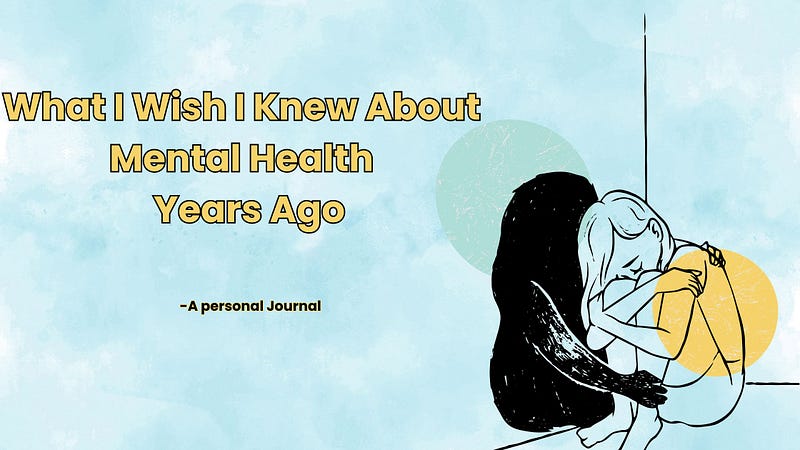
What I Wish I Knew About Mental Health Years Ago
If I could talk to my younger self, the 18-year-old Sneha, scared, frustrated, and broken Sneha, I would hug her and apologize for nurturing her to become a mess. I am sorry for normalizing your feelings and for not realizing your struggles and making them worse. I am sorry for not being able to speak when needed, stand up for you, and let all the traumas, negativity, and struggles be engraved deeply in you. I am sorry for not realizing the importance of mental health and throwing you off the cliff. I am sorry.
Back then, I thought I was like any other person. Experiencing life’s ups and downs and just coping with everyday stress and worry. With time, though, I realized my troubles were just NOT normal. Unknown to me, I was battling with serious mental health issues; I put myself in a threatening situation from which it took years for me to bounce back.
I want to share what I’ve learned in the hopes that anyone who reads it, especially those going through a difficult time in silence, can understand what’s happening inside them and realize they’re not alone.
To My Younger Self: Your struggles are real, and you don’t have to dismiss them. It’s okay if they don’t get you, and trust me even after years there won’t be one single person who’ll understand you! But you need to keep going, for yourself!
I wish we could sit together to help you understand what was happening. I’d tell you that all those feelings you’ve been brushing off, including the confusion, sadness, emptiness, and even fear, are all real.
It’s okay to feel what you’re feeling. You don’t have to surrender to their ‘just a phase’ or ‘something everyone goes through dialogue!
I didn’t realize these were warning flags. I assumed I could ignore the anxiety or push away the feelings of loneliness and the sense of self-hatred that were deeply rooted in me. I didn’t know that ignoring these emotions would not make them go away; instead, they would get more intense. If I had recognized these warning signs earlier, I could have avoided years of upheaval and pain. I wish I had been gentler with myself, tried to share this with someone, or at least helped myself grow back. I regret not realizing at the time that my difficulties were genuine and did not make me weak or overly sensitive. They made me human.

The Taboo, The Stigma
From my early years, the side of mental health I am referring to has started appearing. Although back then, it was Greek and Latin to me. I didn’t understand or realize what was happening. I even started hallucinating at one point. I know that’s bizarre and creepy, but it didn’t strike me as a severe issue back then. Everyone else laughed it off, including my parents and my closest friends, and honestly, I did, too.
Looking back, I realize how strange and unsettling it must have been, yet I didn’t see it as a serious problem then.
I didn’t realize that hallucinations were signs that my mind was having problems, not merely “funny” or “odd” occurrences.
As I got older, I thought changing environments, engaging in activities, and staying busy might improve things. Even when I tried sharing, I was told this happens to everyone, including the worst of my fears. I chose to move to a new city, hoping that a new beginning might somehow “reset” my mental state. But that action sent me somewhere even worse. Today I feel sorry that I put myself into the “black hole” voluntarily, where I felt confined, alone, and misinterpreted. Every day felt like a fight because of the loneliness, the ongoing sense of being lost, and the difficulty of getting out of my head.
Relocating didn’t solve the issue. It just proved that fleeing away from your situation was not the answer. As my mental health deteriorated, I began to experience physical symptoms. My weight dropped, I would faint at random, and even simple activities started to seem insurmountable. It was as if my body was screaming for assistance since my head couldn’t.
And still, I ignored these signs, convinced I could handle things on my own. It wasn’t until one day at work, after fainting for the nth time, that a colleague suggested I see a psychiatrist.
To my younger self: I am sorry for pushing you into the endless loop.
The Beginning of Healing: Asking for Help
Sitting in that psychiatrist’s office was one of the most eye-opening experiences of my life. For the first time, I was able to see my mental health struggles as real, valid issues that deserved attention. I learned that I didn’t have to face everything alone and that, contrary to my belief, seeking help wasn’t a sign of weakness. It was a step toward strength.
That day marked the beginning of my healing journey, but it didn’t happen overnight. Healing is not linear; it’s been a lengthy process for me. Some days, I feel like I’m progressing, while others feel I’m right back at the beginning. But over time, I’ve learned that even the slowest progress is still progress, and every step forward, no matter how small, matters.
You Can Cope Too When You’re Feeling Lost
If you’re reading this and can relate to some of my experiences, I’d want to provide some insights for dealing with mental health issues. These aren’t magic solutions, but they may help make the road more tolerable.
Acknowledge Your Feelings Without Judgement.
Allowing yourself to feel without self-judgment is one of the most challenging aspects of managing mental health concerns. Our world frequently advises us to adapt to everything or move on. However, healing begins with accepting that your feelings are genuine and valid.
Do not push your emotions aside. Sit with them, comprehend them, and let yourself feel.
Change Is Not a Cure-All
It’s easy to think that changing your surroundings will change your inner sphere, but this isn’t always true. Moving to a new location, job, or group of acquaintances will not necessarily affect your inner world. True healing frequently requires facing your difficulties full-on rather than avoiding them, even if outward changes can be revitalizing.
Seek Support: You Don’t Have to Do This Alone
If there’s one thing I wish I’d realized sooner, it’s the value of seeking help. Speaking with loved ones, friends, or a mental health professional can help relieve some of the stress. Mental health difficulties can be lonely, but talking to someone who listens might help you feel less alone.
Accept That Healing Is a Journey, Not a Destination
Healing isn’t something you check off a list. It’s a journey with ups, downs, and pauses along the way. It took me a long time to realize that progress doesn’t mean perfection, and setbacks don’t mean failure. It’s okay to take things one day at a time and to go at your own pace.
Take Care of Your Body as Well as Your Mind
Mental and physical health are interrelated; caring for one may help the other. Small changes, such as getting enough sleep, eating nutritious foods, and scheduling time for movement, even if it’s just a brief stroll, can make a difference. When I ignored my mental health, my body bore the brunt of the consequences. It was a difficult lesson, but I have learned to listen to my mind and body.
Dear present and future self — You will be Okay
Were it possible to turn back time, I would tell my younger self, and all others who it concerns to consider especially, that it is imperative to pay attention to one’s mental health. Neglecting it will not erase it, and escaping will not provide solace. Effective recovery takes time, empathy, and the audacity of asking for help.
I am still on my journey of healing. It is painstaking and often frustrating, but I am proud of how far I have come. Today, I decided to talk about it because it is not a must-have to fight alone. If you are quietly suffering or just beginning to accept your reality, your feelings are real, and there is nothing wrong with seeking help.
You should exist in a state of wholeness, stability, and awareness that you are capable of more than what you think. You can heal slowly, and every little thing you do, however insignificant it may seem, has its place in the brighter and healthier tomorrow ahead of you.
Disclaimer: This post may contain affiliate links. If you click and buy, we may receive a small commission at no extra cost to you. Read our full disclosure here.
