
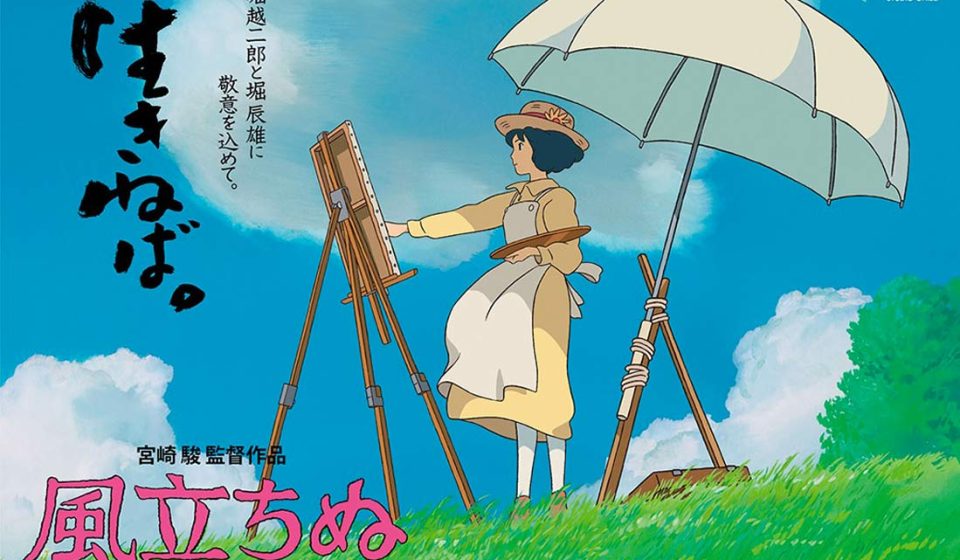
Movie Review: The Wind Rises
The wind is rising. We must try to live.
Critics Rating: 5/5 Stars
Verdict: A meditation on ambition, love, and the price of creation. One of the most quietly profound movies ever made.
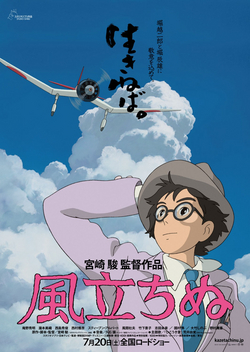
About the film
Director: Hayao Miyazaki
Studio: Studio Ghibli
Release year: 2013
Runtime: 126 minutes
Language: Japanese (English dub available)
Genre: Animated drama/biography
There’s a particular kind of heartbreak that only truly great cinema can deliver: the quiet, sustained ache that lingers long after the credits roll. Hayao Miyazaki’s “The Wind Rises” (2013) is precisely this kind of film. What appears at first to be a straightforward biographical drama about an aircraft engineer gradually reveals itself to be something far more ambitious: a meditation on ambition itself, on the price of creation, and on how love and death interweave with our highest aspirations.
If you know Studio Ghibli, “The Wind Rises” might surprise you. There are no talking animals or magical worlds here. Instead, Miyazaki tells a grounded story set in 1920s and 1930s Japan. The main character isn’t on a fantasy adventure; they’re driven by a very human goal:
The wish to create something beautiful.
Simplicity as strength
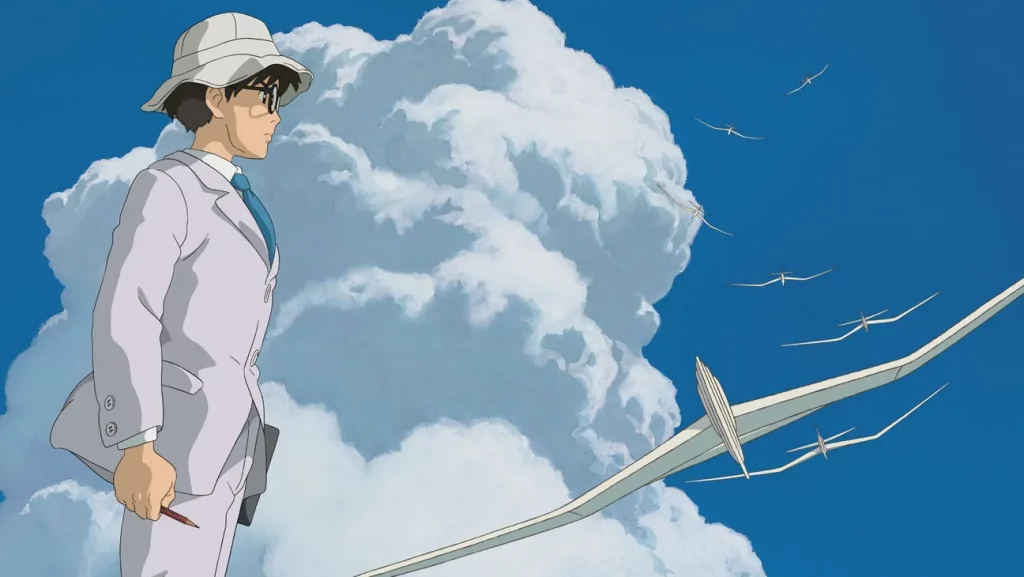
The film follows Jiro Horikoshi from boyhood into middle age as he pursues his dream of designing aircraft. Loosely based on the real-life designer of the Zero fighter plane, Miyazaki strips away most historical details in favor of emotional truth. Jiro is poor, nearly blind without glasses, and living in Japan, still grappling with modernity. Yet none of these obstacles diminishes his vision.
What makes the narrative remarkable is its refusal to be grandiose. There are no climactic battles, no dramatic revelations, no triumphant third-act breakthroughs. Instead, the film accumulates meaning through small moments: Jiro sketching in notebooks, conversations with colleagues, the gentle unfolding of a love story that seems almost incidental until you realize it’s the film’s emotional core.
The film moves at a slow, thoughtful pace. If you’re used to fast, plot-heavy stories, it might feel slow at first. But if you stick with it, you’ll see that every quiet scene and small interaction matters and adds up to something meaningful by the end.
The weight of history
One of the film’s most powerful aspects is its handling of history. Jiro’s greatest work, the Zero fighter, became a deadly weapon in World War II. Miyazaki doesn’t ignore this or try to hide it.
Instead, the film presents a nuanced meditation on artistic intention versus historical consequence. Jiro designs beautiful machines. That the military weaponizes them is beyond his direct control, yet inseparable from his legacy. This moral complexity is handled with remarkable subtlety. We’re invited to sit with the discomfort, to recognize that creation doesn’t exist in a vacuum.
In the film’s final sequences, when Jiro sees his completed Zero, his expression registers not triumph but something closer to melancholy resignation. This moment is almost throwaway in terms of plot but absolutely central in terms of meaning. It crystallizes the film’s central concern: the artist’s impotence in the face of history.
Nahoko: the heart of everything
If “The Wind Rises” has a true center, it’s not Jiro but his relationship with Nahoko, a woman he first encounters as a boy and meets again as a young man. Their love story unfolds with remarkable delicacy, almost anti-dramatically. There are no passionate declarations, no dramatic confessions. Instead, love is communicated through glances, through comfortable silences, through the simple fact of wanting to be near another person.
Nahoko is slowly dying from tuberculosis, which was often fatal in 1930s Japan. Miyazaki doesn’t make this overly dramatic. Instead, he shows it as a sad reality that shapes their lives. Knowing their time is short makes every moment between them feel gentle and deeply moving.
What’s brilliant about Nahoko’s character is how she functions on multiple levels. Narratively, she’s Jiro’s love interest. Thematically, she’s a personification of time itself: beautiful, present, and fundamentally fleeting. Symbolically, her illness mirrors Jiro’s own mortality, reminding us that no matter how enduring we intend our creations to be, we ourselves will not endure. Every moment with her is precious precisely because it cannot last.
What makes it matter
“The Wind Rises” is many things at once. It’s a love story, a biography, a look at history, a reflection on life and death, and a thoughtful take on what it means to create art and take responsibility. The way Miyazaki brings all these together shows his skill as a filmmaker.
For creators of any discipline (artists, writers, musicians, engineers), the film speaks directly to the heart. It acknowledges that the drive to create something beautiful is deeply human and deeply compelling. It also acknowledges that this drive comes at a cost. Those we love suffer for our ambitions. Our creations inevitably exceed our intentions. We die before seeing the full consequences of our work.
Yet the film doesn’t counsel against creation. If anything, it dignifies the act by honestly acknowledging its cost. There’s something profoundly moving in the idea of pursuing a vision not despite knowing you’ll never fully control its consequences, but in full awareness of this impossibility.
A personal film
After “The Wind Rises,” Miyazaki said he was retiring, though he later came back to direct “The Boy and the Heron” (2023). Many people still see “The Wind Rises” as his most personal film. It is a story about what it means to spend your life trying to make something beautiful. If this was his goodbye to a certain kind of filmmaking, it was a great one. Instead of trying to top his past work, Miyazaki made a film about what it means to be human.
The film doesn’t give easy answers.
Is Jiro’s pursuit of perfection beautiful or destructive?
Should we hold creators responsible for how their creations are weaponized?
What does it mean to love someone you know will leave you?
The film sits with these questions rather than resolving them, trusting its audience to grapple with complexity.
In a career spanning decades and yielding multiple genuine masterpieces, “The Wind Rises” represents something increasingly rare: an artist creating not what audiences expected but what he needed to create.
Final thoughts
“The Wind Rises” is a film that reveals more with each viewing. It’s not for everyone. The pace is slow, and the story doesn’t follow the usual pattern. There are no easy emotional payoffs. But if you’re open to it, the film offers something rare: real depth, shown through quiet moments and true humanity.
If you’ve dismissed anime as shallow entertainment, “The Wind Rises” will challenge that assumption. If you’re a longtime Miyazaki devotee, it will deepen your appreciation for his artistry. Either way, it’s a film that insists on being taken seriously and rewards that seriousness with genuine magic. In the end, “The Wind Rises” lingers with you. Not just as a work of animation, but as a reminder of the power, complexity, and humanity of truly great art.
Where to watch
“The Wind Rises” is available on select streaming platforms, on physical media, and for digital purchase. Streaming availability varies by region and may change, so check your preferred platform for current options. Best experienced on the largest screen available, with full attention to the visual and sonic detail that makes it extraordinary.
Have you seen “The Wind Rises”? What did you think? Share your thoughts in the comments below.
Have you seen “The Wind Rises”? What did you think? Share your thoughts in the comments below.
Interested in more in-depth film discussions? See Top 6 K-Dramas That Got Mental Health Right and Why Do We Rewatch Comfort Movies and Shows?
Disclaimer: This post may contain affiliate links. If you click and buy, we may receive a small commission at no extra cost to you. Read our full disclosure here.